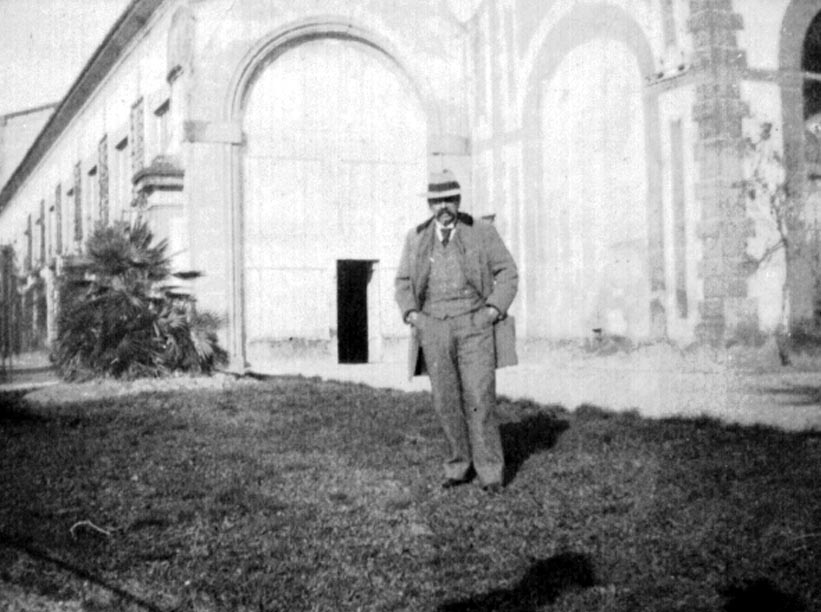
Marquis Bardo Corsi Salviati died in 1907 having had only one daughter, Francesca, and his entire estate, name and lineage passed to his grandson, Giulio Guicciardini, who from that moment on took his grandfather’s surnames along with his own. Giulio, the son of a decisive and emancipated woman such as Francesca Corsi Salviati, and husband of Eleonora Pandolfini, who was sensitive to art and beauty, was a prominent personality in the society of the time, and developed a keen interest in the modern management of his vast agricultural estates after returning from the First World War, with a genuine concern for the poorer sections of society, both in the countryside and in the city. In the Villa at Sesto, which he particularly loved, he began painstakingly restoring the eighteenth-century style that had been destroyed over the last fifty years. Before putting these projects into practice, Giulio studied in detail the historical papers in the family archive, finally publishing a history of the Villa and Garden that has remained a seminal work, La Villa Corsi in Sesto, Florence, 1937.
Count Giulio’s first projects
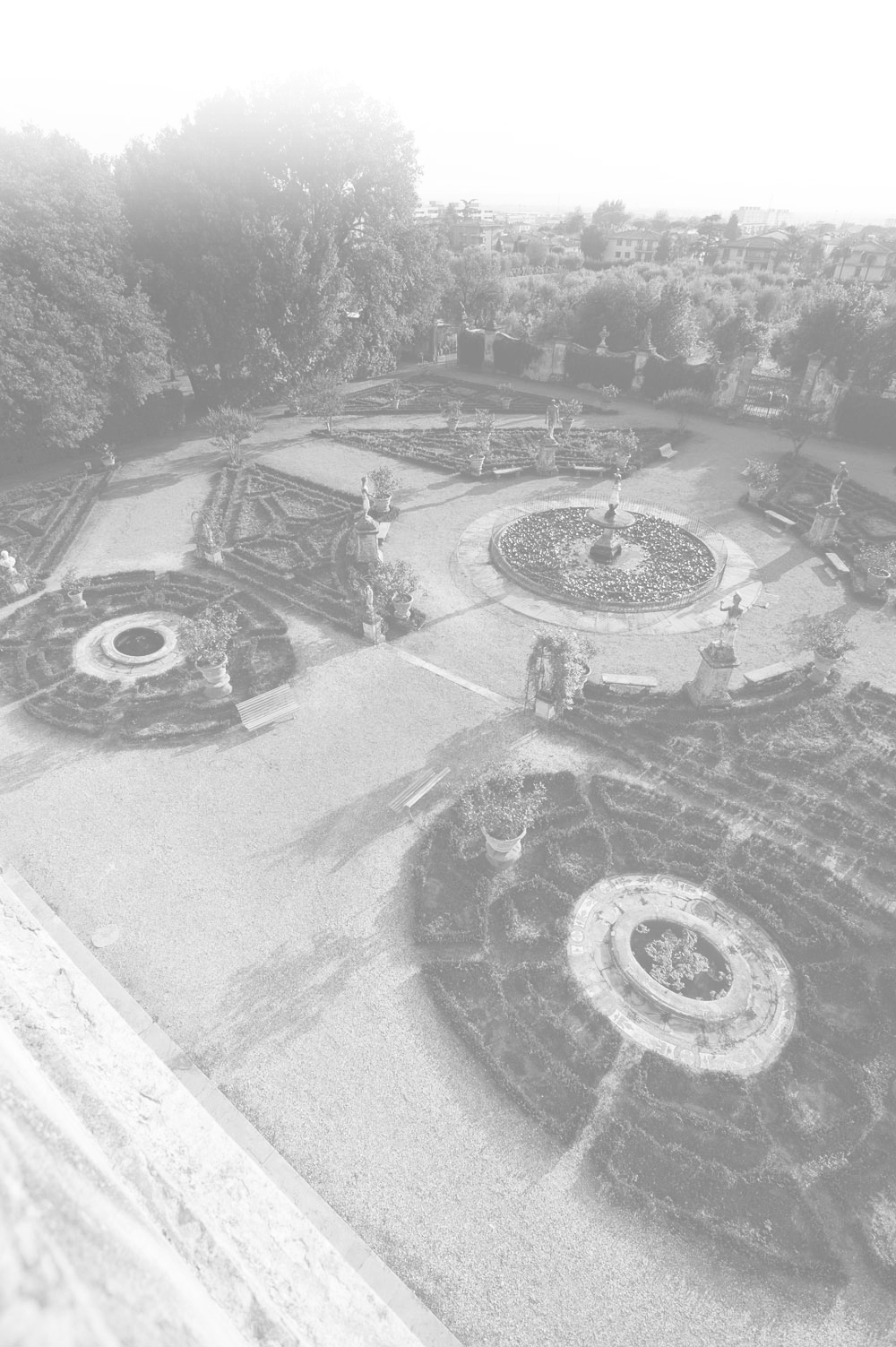
Based on the many archival documents he consulted and studied, Giulio restored the garden to its eighteenth-century layout, but without totally destroying what the different cultural periods had produced, thus showing his respect for art in all its forms and repurposing the ornaments in the garden. The parterre was reconstructed with the same design that had characterised it in the second half of the eighteenth century, with borders of dwarf boxwood hedges, with pots of citrus fruits at the apexes of the geometric figures and seasonal blooms. The trees around the perimeter of the parterre were trimmed and only a few palm trees were left. The only elements that had remained unaltered over the centuries were the stone ornaments (statues, urns, etc.), which, however, had remained half-hidden by the lush exotic vegetation, and the two small elliptical basins in front of the Villa’s façade, which were restored and decorated with polychrome mosaics at Giulio’s behest. The two heated greenhouses, the pride of Bardo Corsi, were demolished.
The resumption of work after the First World War
When war broke out, Giulio, although exempt from the call to arms as an only child, chose to volunteer as a second lieutenant in the Red Cross. On his return from the front, work on the renovation of the garden could be resumed, and the English woodland was restored, which was redefined with a more regular design based on perspective axes and optical channels, so as to create a connection between the park and the Villa. The woodland was thus divided into three parts: the part closest to the parterre was cleared and fenced off with laurel hedges interspersed with squared holm oaks; a central part that he called the Giardino della Signorina (the young lady’s garden), and the furthest part, with the romantic pond in the middle, which was not changed. The space where the greenhouses were located was turned back into a lawn, as in ancient times, by felling the centuries-old cedars. At the end of the lawn, on the embankment of the hillock, where the stream that fed the pond once flowed, a green theatre was built. Outside, set against the wall of the villa on the side of the small theatre, were placed the eighteenth-century statues by Barbieri, which were formerly inside the house.
The Giardino della Signorina and the Maze
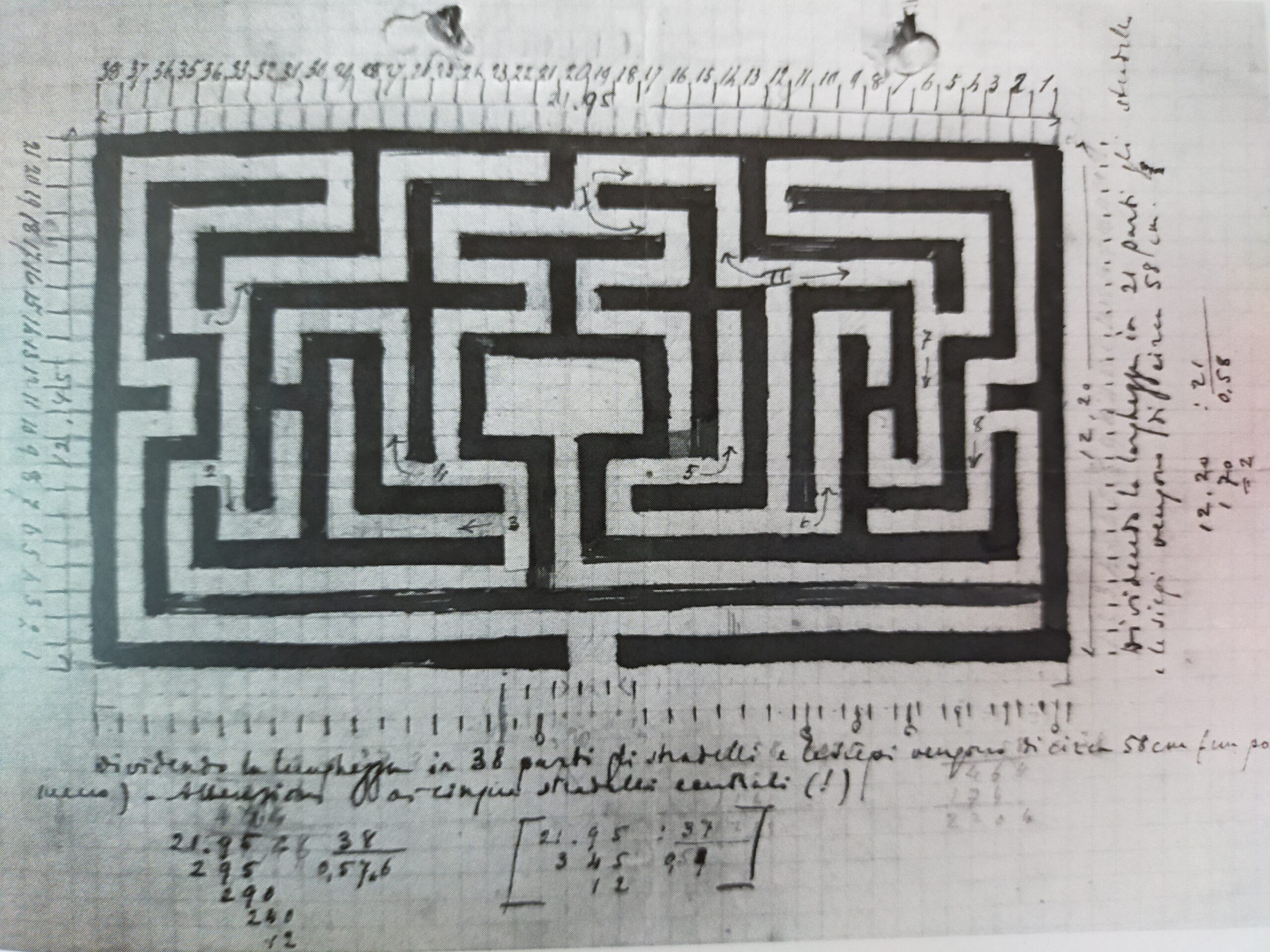
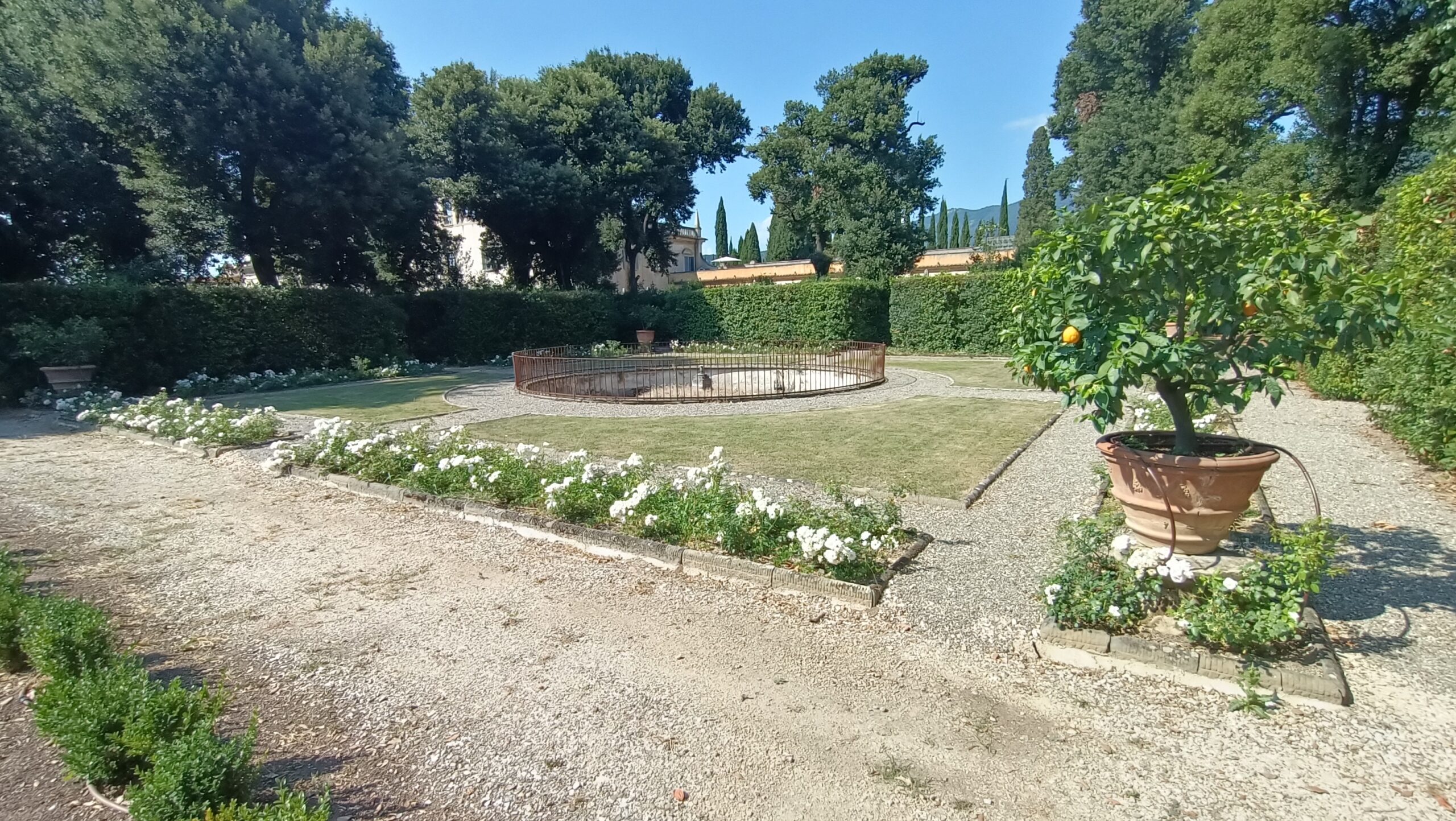
Between the formal garden and the romantic woodland, a small square garden opens up, renamed “della Signorina” by Count Giulio Guicciardini Corsi Salviati after the birth of his youngest daughter Anna. The layout echoes the design of the parterre in front of the Villa, with geometric lawn beds and rose borders with a small round fountain in the centre, where a bronze by the Sesto born sculptor Antonio Berti was placed in 1936, showing Anna standing on a turtle, holding a fish. This bronze is now preserved by Berti’s descendants. In 1921 Giulio wanted to create a boxwood maze on the southern side of this part of the garden, leaning against the boundary wall, reminiscent of a feature that had existed at the beginning of the eighteenth century but then completely disappeared. As no image of this old maze was available, the design was recreated by the Count himself by taking inspiration from the famous maze at Hampton Court, with an entrance and a central point to be reached. Today the old boxwood plants, which were unfortunately heavily damaged by pests, have been pruned and tended to, and the dead ones replaced by new seedlings, and soon the maze will be usable again.
The Green Theatre
The lawn that extends from the eastern façade of the Villa was restored by Count Giulio Guicciardini from the 1910s onwards, removing some large specimens of Lebanese cedar, and clearing the fake hillock, inside which a grotto had been carved. To close off this open area, which formed a large auditorium, and making partial use of what remained of the artificial elevation, in 1921–22 Giulio had a small green theatre built, with boxwood backdrops, inspired by what he had admired – and reproduced in his notebooks – in the gardens of Mirabell Castle in Salzburg. The stage was surrounded by shaped curtains of cypress and yew, an ivy canopy concealed the prompter’s pit, and columns of cypresses were placed at the sides and protruded from behind the back hedges. A statue of Apollo was placed at the end of the stage.